
A failing heating system during Michigan’s harsh winters creates urgent situations for homeowners. Distinguishing between a repairable issue and a system needing immediate replacement becomes critical for your family’s safety and comfort when temperatures drop below freezing. Modern heating systems typically last 15 to 20 years with proper maintenance. However, certain warning signs indicate when repair attempts become impractical, or when continuing operation poses safety risks to your household.
Climate Pros Inc helps homeowners throughout Macomb and the surrounding areas recognize these critical indicators before minor issues escalate into dangerous situations requiring emergency HVAC services. We’ve compiled this guide to help you identify when your heating equipment needs immediate attention from qualified professionals.
Heating System Lifespan
Both furnaces and heat pumps face performance decline as they age. Equipment manufactured before 2010 operates with lower efficiency ratings compared to current models. The Annual Fuel Utilization Efficiency (AFUE) rating for older furnaces averages 65-70%, while modern systems achieve 95-98% efficiency.
Systems approaching or exceeding 20 years face increased failure rates. Equipment reaching three-quarters of its expected lifespan requires careful evaluation to determine whether continued repairs remain practical for your home heating needs.
Critical Warning Signs Your Furnace Needs Replacement
System Age and Component Wear
Furnace components, including blower motors, gas valves, and ignition systems, experience wear patterns that accelerate after the 15-year mark. Multiple component failures within short timeframes suggest broader system deterioration requiring professional assessment from an HVAC company.
Older furnaces lose efficiency each year after reaching around 10 years of operation. Dirty coils, worn bearings, and deteriorating seals contribute to this gradual decline. Regular maintenance slows this process, but cannot prevent age-related efficiency loss entirely.
Frequent Short Cycling
Short cycling occurs when your furnace turns on and off repeatedly without completing full heating cycles. This pattern indicates failing components like thermostats, flame sensors, or heat exchangers.
A properly functioning furnace runs for 10 to 15 minutes per cycle. Systems cycling every 3 to 5 minutes waste energy and strain mechanical components. This accelerates wear on electrical contacts and motors.
Thermostat placement near heat sources, drafts, or direct sunlight causes some cycling issues. However, when relocating the thermostat fails to resolve the problem, internal system failures become the likely cause.
Carbon Monoxide Hazards
Cracked heat exchangers allow combustion gases to enter living spaces. Carbon monoxide detectors triggering near heating equipment demand immediate system shutdown and professional inspection.
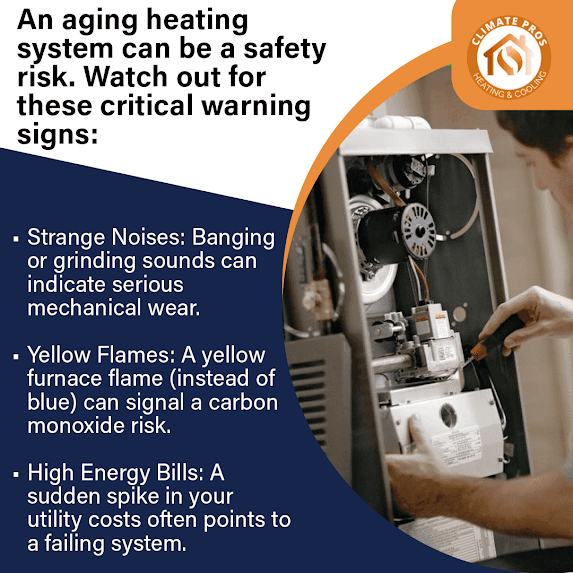
Yellow or flickering pilot light flames, instead of steady blue flames, indicate incomplete combustion and potential carbon monoxide production. These flame color changes develop gradually as heat exchangers deteriorate.
Rust or water stains around the furnace base suggest condensation from flue gases. This is another indicator of heat exchanger failure. These conditions require emergency replacement rather than repair attempts due to safety concerns.
Abnormal Flame Appearance
Natural gas furnaces should maintain steady blue flames with minimal yellow tipping. Predominantly yellow or orange flames indicate incomplete combustion, creating carbon monoxide and reducing heating efficiency.
Flickering flames or flames lifting away from burners signal air-to-fuel ratio problems requiring immediate attention from an HVAC company near you. These combustion irregularities waste fuel and create potentially dangerous conditions.
Soot accumulation around burner assemblies or inside the furnace cabinet indicates chronic combustion problems. Black residue around cabinet seams or on nearby surfaces suggests combustion gases escaping the heat exchanger. This condition requires immediate professional evaluation.
Rising Energy Bills
Monthly heating bills increasing 25% or more compared to previous years, without corresponding rate increases or usage pattern changes, signal declining system efficiency. Tracking monthly therm consumption for gas furnaces provides objective efficiency measurements. Comparing current usage to previous years at similar outdoor temperatures reveals system performance trends.
Uneven Home Heating
Rooms maintaining different temperatures despite identical thermostat settings indicate inadequate system capacity or distribution problems. Ductwork issues cause some temperature variations, but failing blower motors create more pronounced differences.
Systems running continuously without reaching desired temperatures lack sufficient output for the home’s heating load. Properly sized heating systems should maintain comfortable temperatures during the coldest days in your geographic region.
Mechanical Noises
Banging, screeching, or grinding noises during operation indicate mechanical component failure. Blower wheel bearings create high-pitched squealing sounds, while cracked heat exchangers produce rumbling or booming during startup.
Popping sounds from ductwork during heating cycles are common in some installations. These sounds become more pronounced as systems age and metal fatigue increases. However, loud banging from the furnace cabinet itself signals serious internal component damage.
Rattling sounds from loose panels differ from mechanical grinding or bearing failures. Tightening cabinet screws eliminates simple rattles, while internal mechanical sounds indicate component problems.
Physical Deterioration
Rust formation on cabinet surfaces, particularly around seams and joints, indicates moisture infiltration compromising system integrity. Cabinet damage from water leaks or physical impacts compromises safe operation.
Cracks in the furnace cabinet or separation at welded joints create combustion safety hazards. These structural failures cannot be reliably repaired and necessitate complete system replacement.
Humidity Control Issues
Furnaces creating excessive indoor dryness, with relative humidity dropping below 20%, indicate oversized equipment or improper ventilation. Mold growth near supply registers or return air grilles suggests humidity control failures requiring system evaluation.
Systems creating condensation on windows during winter operation run inefficiently or have undersized ductwork. Static electricity increases in homes with excessive dryness, causing minor shocks and damage to electronics.
Multiple Repair Episodes
Systems requiring multiple service calls within a single heating season suggest declining reliability. Each repair addresses individual component failures but cannot reverse overall system aging.
Parts availability for older equipment sometimes becomes problematic, extending repair timeframes. Experienced HVAC repair technicians can assess whether continuing repairs make sense for your situation.
Warning Signs Your Heat Pump Needs Replacement
System Age and Efficiency Loss
Heat pumps lose efficiency and capacity over the years. This degradation occurs gradually through refrigerant leaks, compressor wear, and coil deterioration that accumulates over time. Heat pumps manufactured before 2010 operate with Heating Seasonal Performance Factor (HSPF) ratings of 6.8-7.7, while modern units achieve ratings of 8.8-13+. This efficiency difference translates to substantial operating cost increases in older equipment.
Abnormal Defrost Cycling
Heat pump systems displaying reverse cycle defrost activation every 10 to 15 minutes signal refrigerant problems or sensor malfunctions. These issues require immediate attention from qualified technicians.
Normal defrost cycles occur every 30 to 90 minutes, depending on outdoor temperature and humidity conditions. Frequent defrost cycling reduces heating capacity and increases energy consumption.
Compressor Failure Signs
Failing heat pump compressors produce grinding or clicking sounds during operation. These compressor failures represent major component damage requiring extensive work.
Compressors typically last 10 to 15 years before showing failure signs. Hard starting, where the compressor struggles to begin operation, indicates electrical or mechanical problems developing inside the sealed unit.
Inadequate Heating Capacity
Heat pumps losing heating capacity struggle to maintain set temperatures when outdoor temperatures drop. Systems running continuously without reaching desired temperatures lack sufficient output for the home’s heating load.
Backup heating systems that activate constantly indicate the heat pump cannot meet heating demands. This situation creates high electricity bills and suggests capacity problems requiring system replacement.
Refrigerant Leaks
Ice formation on outdoor coils during heating mode indicates refrigerant flow problems or low refrigerant charge. Refrigerant leaks develop gradually through coil corrosion, loose connections, or compressor seal failures.
Heat pumps require specific refrigerant charges for proper operation. Low refrigerant reduces heating capacity and efficiency while increasing compressor wear. Older systems using R-22 refrigerant face supply limitations and high refill costs.
Rising Energy Consumption
Monthly electricity bills increasing 25% or more compared to previous years, without corresponding rate increases or usage pattern changes, signal declining system efficiency. Tracking monthly energy consumption for heat pumps provides objective efficiency measurements. Comparing current usage to previous years at similar outdoor temperatures reveals system performance trends.
Temperature Distribution Problems
Rooms maintaining different temperatures despite identical thermostat settings indicate inadequate system capacity or distribution problems. Failing components create more pronounced temperature differences throughout your home.
Adding insulation or replacing windows improves home efficiency, but may reveal that existing heating equipment lacks capacity for modified heating loads. Previous additions or renovations sometimes create capacity mismatches requiring system upgrades.
Outdoor Unit Deterioration
Heat pump outdoor units showing coil corrosion lose refrigerant charge, and efficiency. Cabinet damage from water leaks or physical impacts compromises safe operation. Small rust spots expand over time as moisture penetrates protective coatings.
Outdoor units exposed to road salt or coastal environments face accelerated corrosion. Protective coatings deteriorate over time, exposing metal components to corrosive elements that reduce system lifespan.
Moisture Control Difficulties
Heat pumps struggling with moisture removal during heating cycles signal refrigerant charge problems. Mold growth near supply registers or return air grilles suggests humidity control failures requiring system evaluation.
Proper humidity balance affects perceived comfort independent of actual air temperature. While humidifiers address symptoms, underlying system problems may require equipment replacement.
Frequent Service Requirements
Systems requiring multiple HVAC service calls within a single heating season suggest declining reliability. Tracking repair frequency over recent years reveals patterns indicating replacement timing.
One component failure often leads to subsequent problems in related systems. Refrigerant leaks damage compressors in heat pumps. Addressing isolated problems in aging systems provides temporary solutions but fails to prevent cascade failures developing from accumulated wear.
Planning Your Heating System Replacement
Timing Considerations
Planning replacement during moderate weather avoids emergency situations and provides time for careful equipment selection. However, unexpected failures during winter require immediate response from qualified HVAC installers. Planning ahead allows time to research equipment options and understand warranty coverage before making final decisions.
Long-Term Performance Expectations
Today’s heating systems are built to deliver consistent performance throughout their 15 to 20-year lifespan. New heating systems include manufacturer warranties covering parts and sometimes labor for the initial years, protecting your investment against early failures.
Modern equipment features, including Wi-Fi thermostats and diagnostic capabilities, simplify future maintenance and improve system monitoring. You’ll have better visibility into system performance and potential issues before they become serious problems.
Installation Quality Impact
Proper installation practices affect system efficiency and reliability throughout its service life. Incorrect refrigerant charging, improper ductwork connections, or inadequate condensate drainage create problems appearing months or years after installation.
Working with our experienced HVAC installers in Macomb who follow manufacturer specifications and industry standards protects your equipment investment. Quality installation prevents premature failures and maintains warranty coverage.

Finding Reliable HVAC Services in Your Area
Local Experience Matters
Selecting an HVAC company near you provides advantages beyond convenience. Local companies understand regional climate patterns, building codes, and common installation challenges specific to your area. Established local providers maintain parts inventory for common repair needs and offer faster emergency response times. These factors become important during equipment failures in extreme weather.
Verifying Credentials and Experience
Licensed contractors carry proper insurance protecting homeowners from liability during installation work. Verifying licenses and insurance coverage before hiring prevents potential legal complications. Customer reviews and references provide insight into service quality and business practices. Taking time to research potential contractors leads to better outcomes than selecting based solely on advertised prices.
Climate Pros: Expert Heating System Replacement Services
Emergency Evaluation Services
At Climate Pros Inc, we provide emergency heating system assessments for homeowners in Macomb and surrounding Michigan communities. Our experienced HVAC installers perform complete system diagnostics to identify safety hazards, assess heat exchanger integrity, check for carbon monoxide risks, and evaluate system performance to provide immediate recommendations for your safety and same-day installation services when needed.
Selecting the Right Equipment
Choosing replacement equipment involves balancing initial investment with long-term operating expenses. High-efficiency models provide lower monthly utility bills throughout their service life. Our HVAC services include load calculations, equipment recommendations, and proper installation practices. We help you select systems sized correctly for your home’s specific heating requirements. These factors determine system performance and longevity more than equipment brand selection alone.
Professional Installation
Professional installation goes beyond simply connecting equipment. At Climate Pros, we follow manufacturer specifications for refrigerant charging, ductwork sealing, condensate drainage, and electrical connections. Our HVAC installers verify airflow rates, test safety controls, and calibrate thermostats to ensure your system operates at peak efficiency from day one.
System failures during extreme cold weather create health risks for vulnerable household members and potential property damage from frozen pipes. Our HVAC installers in Macomb understand local weather patterns and building construction methods affecting heating requirements. We complete installations efficiently while maintaining quality standards that protect your investment.
Contact Your Trusted HVAC Installers in Macomb
System failures require prompt response to prevent safety hazards and property damage. Our team provides 24-hour emergency heating system evaluation and replacement services throughout Macomb and nearby areas in Michigan. Professional installation from our experienced professionals ensures proper equipment operation and maximum efficiency.
As an HVAC company near you that treats customers like family, we make the replacement process less stressful. Climate Pros Inc combines professional expertise with personalized service for every installation project. Our HVAC services include honest assessments and professional recommendations based on your specific situation and home requirements. We help homeowners make informed decisions about their heating equipment investments.
Call (810) 794-2200 to schedule an emergency heating system evaluation. Our HVAC company provides reliable solutions when you need them most, backed by professional installation and ongoing support.